Why Your Ferment Tastes Sour but Never Tangy
Quick Answer: Flat sourness means your ferment produced mostly lactic acid and little else. Tanginess is not acidity - it is acidity plus aroma compounds, and those come from a specific early-stage bacterial succession that gets skipped when the ferment is too warm, too salty, or too fast. The most common single cause is fermenting above 72°F, which lets acid-tolerant bacteria dominate before the aroma-producing species have done their work.
The jar smells right, the pH is clearly low, it is unquestionably sour - and it tastes like vinegar with vegetables in it. Nothing is wrong with it. It is just boring.

What is the difference between sour and tangy?
One is a single sensation. The other is a combination that mostly happens in your nose.
Sour is acid on the tongue. Lactic acid, primarily, detected by taste receptors and reported as a single dimension of intensity. More acid, more sour.
Tangy is acid plus aroma. The brightness people describe as tangy comes from volatile compounds - acetic acid, diacetyl, esters, and small amounts of alcohol - that reach the olfactory receptors retronasally while you chew. A ferment with the same pH can taste flat or bright depending entirely on which of those are present.
Which means pH tells you nothing about flavor quality. Two jars at pH 3.4 can taste completely different, and the one that tastes better is not the more acidic one.
The test that proves it: hold your nose and taste. A flat ferment and a complex one taste nearly identical that way. Release your nose and the difference appears instantly - which tells you the missing element was never on your tongue to begin with.
Why does the succession matter so much?
Because different bacteria dominate at different stages, and they make different things.
Stage one belongs to heterofermentative species. In the first days, species such as Leuconostoc dominate. They produce lactic acid plus carbon dioxide, acetic acid, and aroma compounds - and it is that ‘plus’ that becomes tanginess.
Stage two belongs to homofermentative species. As acidity rises, more acid-tolerant species take over. These produce lactic acid and little else - efficient, effective at preservation, and flavor-flat.
Warm ferments skip stage one. Above roughly 72°F, the acid-tolerant species grow fast enough to dominate almost immediately. The ferment is safely sour in three days and one-dimensional forever.
Cool ferments extend it. At 60 to 68°F, stage one runs for several days before the handover, which is where the aroma compounds are built. This is the reason traditional ferments were made in cellars, and the reason batches from a cool autumn kitchen taste better than the same recipe in August.
Time cannot be substituted for temperature. A hot ferment left for six weeks gets more sour, not more complex - the species that make aroma are already gone.
What Nobody Tells You About Salt and Flavor
Salt percentage changes the bacteria, not just the safety. At 2 to 2.5% by weight, the early aroma-producing species are comfortable. At 3.5% and above, they are inhibited while the tougher acid-producers carry on - so an over-salted ferment reliably tastes flat.
Under-salting fails differently. Below about 1.5%, the ferment goes fast and can go soft, and the flavor is often muddy rather than flat. Both directions cost you complexity, for different reasons.
Salt by weight, not by volume. A tablespoon of flaky salt and a tablespoon of fine salt differ by nearly half in weight. This alone accounts for a large share of unexplained batch-to-batch variation in home kitchens.
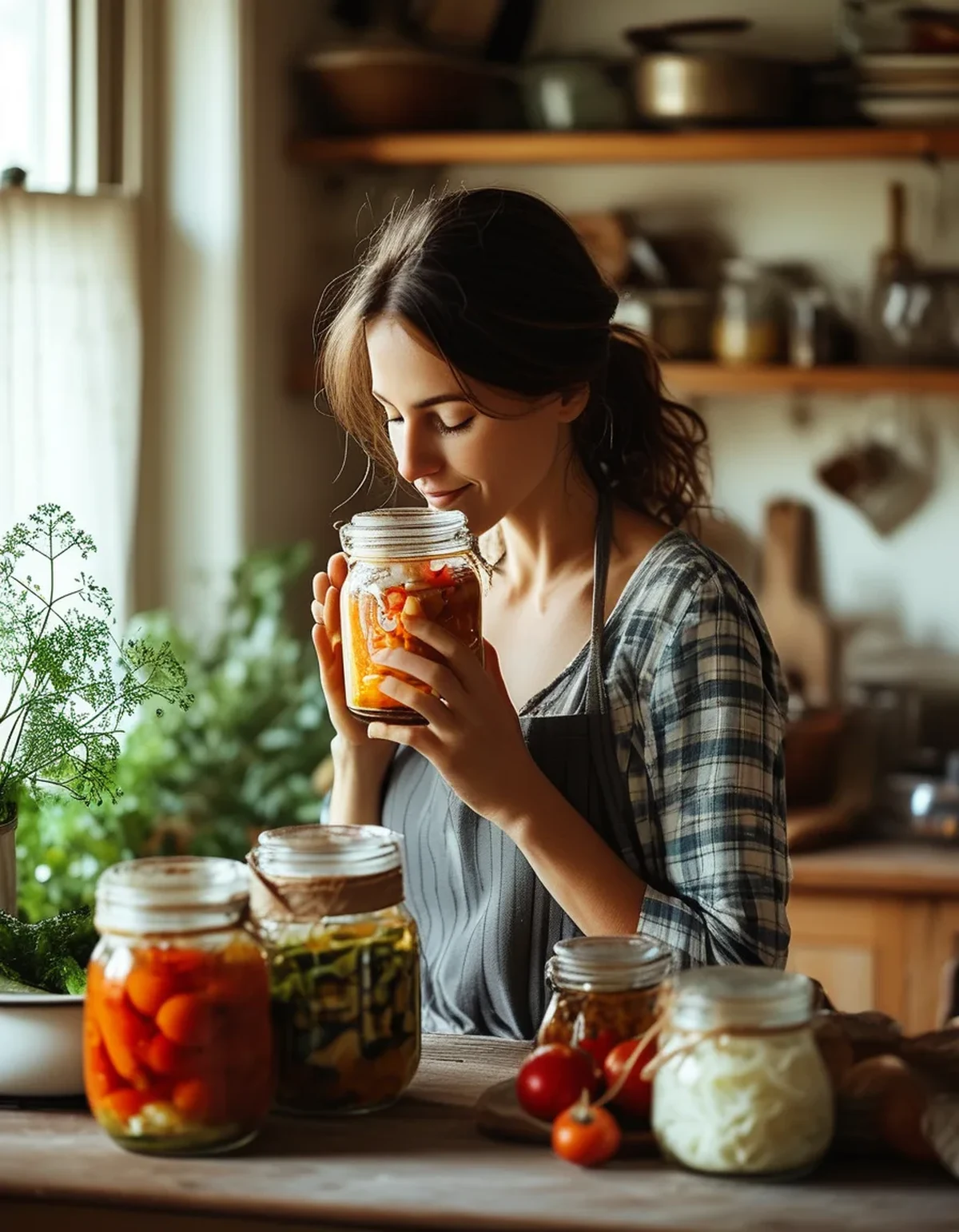
Oxygen exposure kills aroma. The compounds that create tanginess are volatile - they leave. Opening the jar daily to check vents them into your kitchen, which is why the ferment smells wonderful and tastes plain. Burp it, do not stir it.
Cold storage changes it again. The first two weeks in the fridge continue to develop flavor slowly at a temperature where only the slow species function. A ferment tasted the day it goes in the fridge is not the ferment you will eat, which is why patient people report better results.
And older vegetables ferment flatter. Vegetables lose sugars in storage, and sugar is the substrate for the whole process. End-of-season produce that has been in a warehouse produces measurably less complex ferments than fresh-picked.
How do you get complexity back?
Five adjustments, in order of how much difference they make.
Ferment cooler, for longer. Find the coolest spot in your home - typically a basement, an unheated room, or a north-facing corner - and target 62 to 68°F. Expect seven to fourteen days rather than three. This is the single biggest lever, and late summer into autumn is when it becomes easy.
Weigh your salt to 2%. For a 1,000g batch of vegetables, that is 20g of salt. Use a scale, not a spoon.
Leave it alone. Burp the jar or use an airlock, and do not open it to taste before day seven. Every opening costs aroma.
Add a small amount of a sugar-rich vegetable. A grated carrot or apple in a cabbage ferment gives the early-stage species more to work with, which increases aroma production without making the result sweet.
Give it two weeks cold before judging. The flavor at day ten of fermentation and the flavor at day ten in the fridge are genuinely different things.
A note on rescuing a flat batch: you cannot add complexity after the fact, but you can use it differently. Flat ferments work well cooked into dishes where their acidity is the point, and it is worth keeping them rather than starting over.
FAQ: Ferment Flavor Questions, Answered
Can I add a starter culture for more complexity?
You can, and a whey or brine starter from a previous good batch does help - it seeds the population you want. But it does not overcome a temperature that is too warm, because temperature determines who wins regardless of who starts.
Is a flat ferment still good for gut health?
Yes. Flavor complexity and bacterial content are different things, and a one-note ferment is still a live, acidic, populated food. The loss is culinary, not nutritional.
Why did the same recipe taste better last time?
Almost always temperature, sometimes produce freshness. If the last batch was made when your kitchen was cooler, that is the answer - and it is the reason the same recipe improves on its own as the season turns.
How long should a cool ferment actually take?
At 62 to 68°F, most vegetable ferments hit a good balance between ten and eighteen days. If yours is finished in four, the room is too warm.
TL;DR:
- Sour is acid on the tongue; tangy is acid plus aroma compounds produced only in the early bacterial stage.
- Fermenting above 72°F lets acid-tolerant species dominate immediately and skips that stage entirely.
- Weigh salt to 2% - over-salting inhibits exactly the species that make flavor.
- Cooler and longer, undisturbed, then two weeks cold before judging: that is the whole fix.
What makes this satisfying to solve is that the answer costs nothing. A cooler shelf and a scale produce a noticeably better ferment from the same vegetables and the same recipe. If your summer batches have been flat, the next two months are the easiest time of year to fix it - the temperature you need is about to arrive on its own.
Keep Reading
This article is for general informational purposes only and is not medical advice. Always consult a qualified health professional for guidance specific to you.