Fermenting in a Jar Versus a Crock: What Actually Changes
Quick Answer: A jar and a crock produce genuinely different ferments. Jars are cheap, let you see what is happening, and are far less forgiving about oxygen and temperature swings. Crocks use a water-sealed moat and thick walls to hold a steadier, more anaerobic, more temperature-stable environment, which suits long ferments and large batches. For small quick ferments a jar is better; for anything past about three weeks or three kilograms, a crock earns its price.
You made two batches of the same kraut with the same recipe and the same salt, and one is bright and clean and the other went soft with a film across the top.
If the only thing that differed was the container, that is not bad luck. The vessel controls three of the four variables that determine how a ferment goes.
What does the vessel actually control?
Four things, and the vessel has a strong hand in three of them.
Oxygen exposure. Lactic acid fermentation is anaerobic. The organisms you want work without oxygen and the ones you do not — the yeasts and molds that make a white or fuzzy film — need it. Every vessel design is fundamentally an attempt to let carbon dioxide out while letting nothing in.
Temperature stability. Fermentation rate roughly doubles for every several degrees of warmth, and the flavor differs between a fast warm ferment and a slow cool one. What matters is not just the average temperature but the swing — and in the last week of August, kitchens swing more than at any other point in the year, warm in the afternoon and genuinely cool by early morning.
Whether the vegetables stay submerged. Anything above the brine is exposed to air. Keeping it down is the single most common practical failure in home fermentation, and different vessels make it easy or hard.
Light exposure. Minor but real — light degrades some compounds and encourages surface growth. Glass admits all of it; stoneware admits none.
What the vessel does not control is the salt percentage, which is yours to get right regardless of what you ferment in, and which decides more than everything above combined.
What a jar is genuinely good at
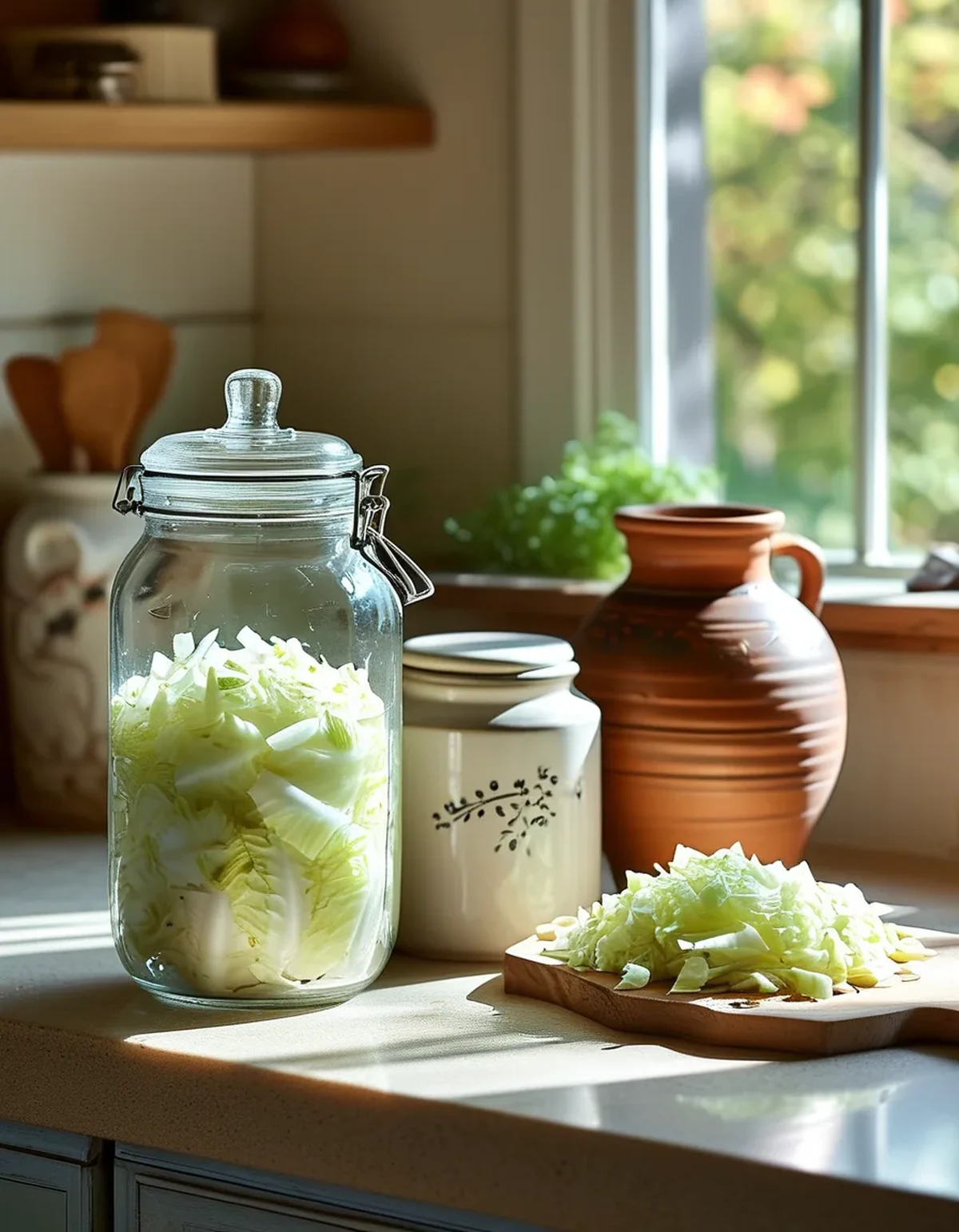
You can see it. For anyone learning, this is decisive. You can watch the bubbles start, see the color change, see the brine level, and spot a problem on day two rather than on day twenty. Nobody learns fermentation faster than the person who can see it happening.
Small batches, which is what most people actually make. A litre jar of quick pickles or a half-kilo of kraut is a completely reasonable amount to eat and a wasteful amount to commit a five-litre crock to.
Cheap, and you can run several at once. Five jars of five variations is how you learn what you actually like, and it costs almost nothing.
Fast ferments do not need the protection. A three to five day cucumber pickle or a quick kimchi is done before the slow problems have time to develop. The whole case for a crock is about weeks, and this is days.
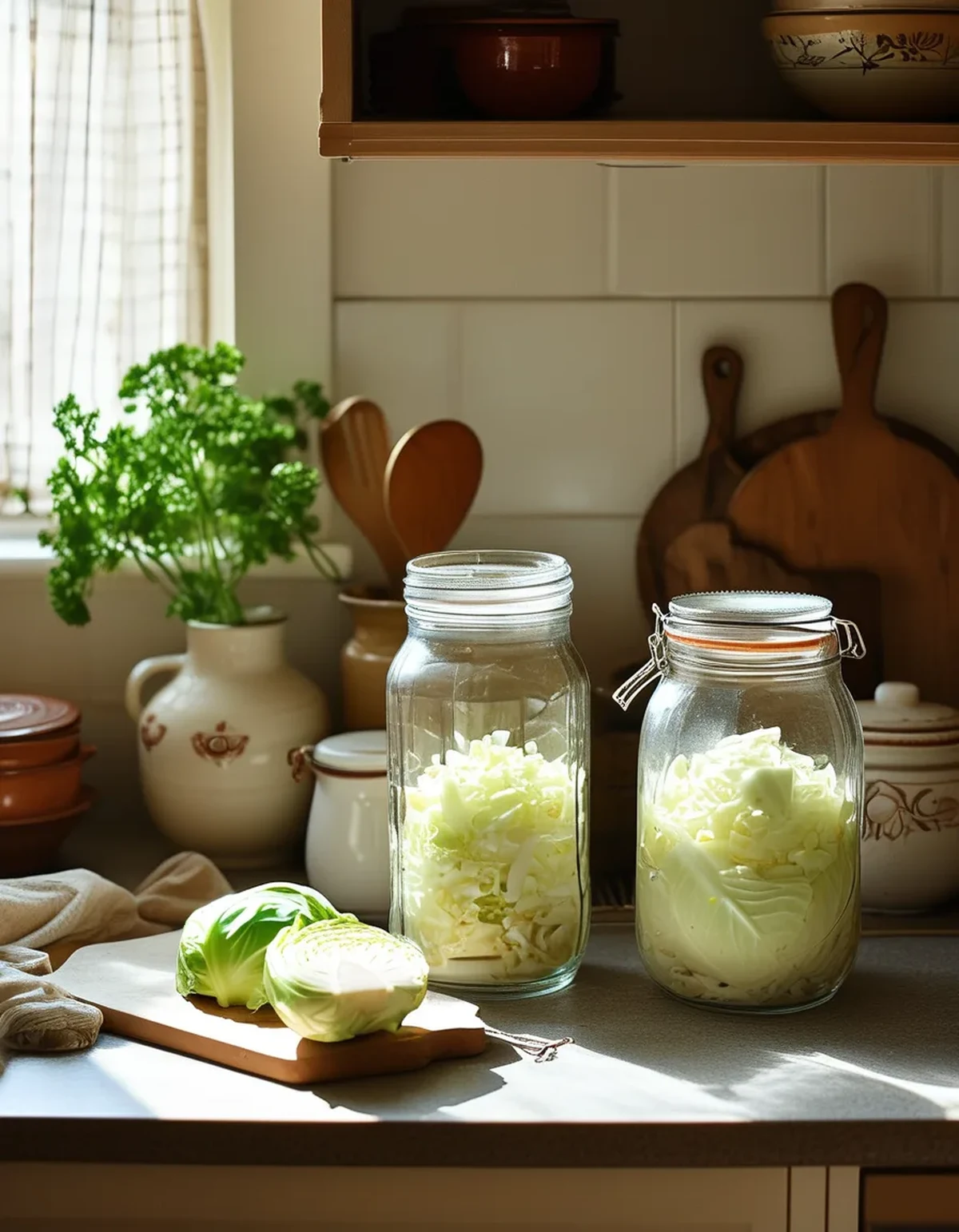
Where jars fall down: the headspace is a reservoir of oxygen, the thin glass follows the room temperature closely, and the lid situation is a genuine problem. A tightly sealed jar builds pressure and needs burping; a loose one lets air in. Airlock lids solve this and cost very little — a silicone airlock lid or a fermentation weight set is the highest-value upgrade in the whole category and turns a jar into something much closer to a small crock.
And the practical one: a jar with a narrow shoulder makes it hard to keep vegetables submerged, because there is nothing to press against. Straight-sided jars are considerably better for this than the classic shouldered ones.
What a crock does that a jar cannot
The water moat. A traditional crock has a channel around the rim that you fill with water, and the lid sits in it. Carbon dioxide from the ferment pushes out through the water; nothing gets back in. This is a genuinely elegant one-way valve with no moving parts, and it produces a much more reliably anaerobic environment than any jar lid arrangement.
Thermal mass. Thick stoneware walls plus a large volume of vegetables and brine change temperature slowly. A crock in a room that swings from 26°C in the afternoon to 17°C at four in the morning experiences a much gentler curve than a jar in the same room. This is the single biggest advantage in the changeover weeks of late summer, when kitchen temperature is at its least stable all year.
Weight stones that actually fit. Most crocks come with fitted stoneware weights that cover almost the entire surface, which keeps everything submerged with far less fiddling than a jar arrangement.
No light. Stoneware is opaque, which removes one variable entirely.
Volume. If you are processing an end-of-season glut — a crate of cabbage, a garden’s worth of cucumbers — a crock handles it in one vessel where you would otherwise be managing eight jars.
The costs: you cannot see what is happening, it is expensive, it is heavy, and the water moat needs topping up as it evaporates. That last one is the classic crock failure — the moat dries out, the seal is lost, air gets in, and a four-week ferment develops a problem in week three that nobody noticed.
What Nobody Tells You About Choosing a Vessel
Batch size decides this more than technique does. Under about two litres, a jar with an airlock lid and a proper weight performs close enough to a crock that the difference is not worth the money. Over about five litres, the crock is not a luxury, it is the practical option.
Duration is the second criterion. Under two weeks, jar. Over four weeks, crock. In between, either, with a preference toward the crock if your kitchen swings.
A cheap crock with a badly fitting lid is worse than a good jar. The whole advantage is the seal, and a crock whose lid rocks in the moat does not have one. If you buy secondhand, check that the moat is intact and unchipped and that the lid sits evenly.
Everyone underestimates evaporation from the moat. In a warm kitchen it can need topping up every few days. Set a reminder for the first week until you know your own rate. Some people use brine rather than water in the moat, so that if any does get drawn in, it is not diluting.
You can approximate a crock in a jar for almost nothing. Straight-sided jar, glass weight, silicone airlock lid, and a tea towel over the top to keep light out. That combination costs a fraction of a crock and handles the great majority of home fermentation perfectly well.
And the thing nobody says out loud: the visible jar makes people intervene. Half the ferments that fail in jars fail because someone opened it to check, three times, in the first week. The crock’s opacity is partly a behavioral feature.
FAQ: Fermentation Vessel Questions, Answered
Can I use a plastic bucket?
Food-grade plastic is used commercially and works. The two caveats: it scratches, and scratches harbor bacteria between batches, so an old scratched bucket is not the bargain it looks. And plastic has essentially no thermal mass, so it behaves like a large jar for temperature purposes.
Do I need to buy weights, or will a bag of brine do?
A zip bag filled with brine — not water, so a leak does not dilute your ferment — is a genuinely good weight, because it conforms to the shape of the vessel and covers the whole surface. It is what many experienced fermenters use in jars in preference to glass discs.
Does the vessel change the flavor, or just the reliability?
Both, indirectly. Vessels that hold a steadier temperature produce a slower, more even fermentation, which most people describe as rounder and less sharp. The direct flavor contribution of stoneware versus glass is nil.
My kitchen swings a lot right now. What do I do if I only have jars?
Move them off the counter. A cupboard, a lower shelf, or the floor of a pantry is dramatically more stable than a worktop near a window, and the change in swing is often ten degrees. It is a free fix and it is the right one for the last weeks of summer.
TL;DR:
- The vessel controls oxygen exposure, temperature stability, submersion and light — three of the four things that decide a ferment.
- Jars win on cost, visibility and small fast batches; add an airlock lid and a proper weight and they get most of the way there.
- Crocks win on long ferments and large volumes because of the water-seal moat and the thermal mass of thick stoneware.
- The classic crock failure is a moat that dried out; the classic jar failure is oxygen in the headspace.
- Batch size and duration decide it: under two litres and two weeks, jar; over five litres or four weeks, crock.
If you are fermenting right now, in the week the kitchen has started going cold at night, the highest-value change is not a new vessel at all — it is moving the one you have off the counter and into a cupboard.
Keep Reading
This article is for general informational purposes only and is not medical advice. Always consult a qualified health professional for guidance specific to you.