Miso and Tempeh at Home: A Realistic Beginner's Guide (No Special Room Needed)
Quick Answer: Homemade miso needs cooked soybeans, koji, and salt fermented for 6-12 months in a cool spot; tempeh needs cooked soybeans, a tempeh starter culture, and 24-48 hours at a steady 85-90°F. Both are more forgiving than their reputation — the real requirements are patience and temperature control, not special equipment.
Miso and tempeh have a reputation as the ‘advanced’ ferments, the ones you graduate to after kimchi and kraut feel easy. In reality, both are simpler in method — they just take longer, and tempeh in particular needs you to actually hit a temperature window instead of just leaving a jar on the counter.

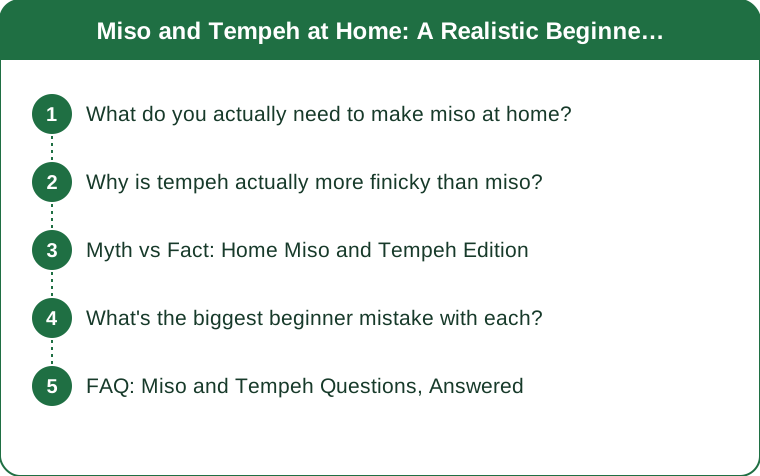
What do you actually need to make miso at home?
Three ingredients: cooked soybeans, koji (rice or barley inoculated with Aspergillus oryzae, sold dried at Asian grocers or online), and salt — roughly a 2:1:1 ratio by weight of soybeans to koji to salt for a standard sweet-leaning miso.
Mash the cooked beans, mix everything together, pack tightly into a crock to remove air pockets, weight it down, and cover. Then wait — 6 months for a young, mild miso; 12+ months for a deep, savory one. A cool basement or closet works fine; you don’t need anything specialized.
Why is tempeh actually more finicky than miso?
Tempeh needs a live mold culture (Rhizopus oligosporus) to bind cooked, split soybeans into a firm cake, and that mold needs a narrow window — 85-90°F for 24-48 hours — to grow evenly without going rogue.
Too cool and it grows too slowly, risking contamination from other bacteria. Too warm and it can overheat itself and die. A yogurt maker, a proofing box, or an oven with just the light on are the most reliable ways to hold that range at home.

Myth vs Fact: Home Miso and Tempeh Edition
Myth: You need a fermentation chamber to make tempeh. Fact: A styrofoam cooler with a heating pad on low, monitored with a cheap thermometer, holds temperature just as well as commercial equipment.
Myth: Miso needs constant attention for months. Fact: Miso is largely hands-off — pack it, weight it, check occasionally for surface mold (scrape off, don’t panic), and otherwise leave it alone.
Myth: A little white fuzz on tempeh means it failed. Fact: White mycelium covering the beans is exactly what successful tempeh looks like. Only black or green-blue patches, or a strong ammonia smell, mean start over.
What’s the biggest beginner mistake with each?
For miso, it’s skimping on salt — under-salting invites bad bacteria to outcompete the koji culture before it gets established. Stick to tested ratios your first few batches.
For tempeh, it’s skipping the vinegar acidification step some recipes call for before incubation, which lowers the pH just enough to discourage unwanted bacteria while the mold gets going. Skip it and you’re relying on temperature alone to keep things clean.
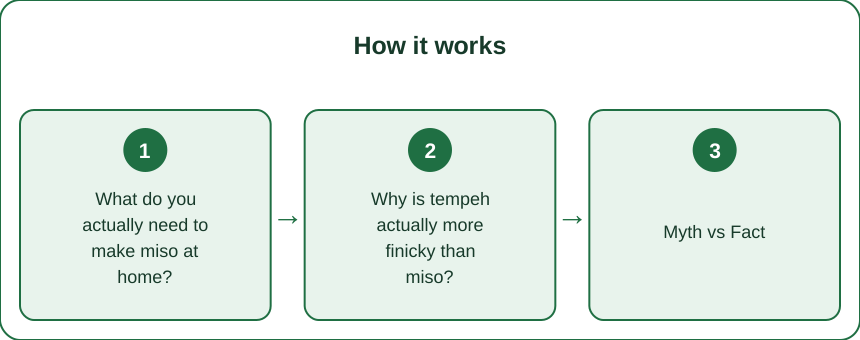
FAQ: Miso and Tempeh Questions, Answered
Can I make miso without koji?
No — koji provides the enzymes that break down the beans into miso’s characteristic flavor and texture. There’s no real substitute; it’s the one ingredient worth sourcing properly.
Does homemade tempeh taste different from store-bought?
Often nuttier and less uniform in texture, since most commercial tempeh uses controlled industrial incubators. Many home fermenters actually prefer the homemade version once they’re used to it.
How do I know if my miso has gone bad versus just aging?
A layer of dark liquid (‘tamari’) on top is normal and can be stirred back in or drained off. Actual spoilage smells rotten or sour in a sharp, unpleasant way — normal miso smells deeply savory, never foul.
TL;DR:
- Miso needs soybeans + koji + salt, packed tight, and 6-12 months of patience — mostly hands-off
- Tempeh needs a steady 85-90°F for 24-48 hours — temperature control matters more than equipment
- White fuzz on tempeh is success; black/green patches or ammonia smell mean start over
- Don’t skimp on miso’s salt ratio or skip tempeh’s acidification step
Both are more about patience and a reliable thermometer than special skill — start with a small batch of each and adjust from there.
Keep Reading
This article is for general informational purposes only and is not medical advice. Always consult a qualified health professional for guidance specific to you.