How to Keep Your Fermented Foods Habit Alive While Traveling
Quick Answer: Shelf-stable fermented foods like miso paste, dried kimchi, or fermented hot sauce travel well without refrigeration for short trips, while probiotic-rich options like fresh sauerkraut are best sourced locally once you land rather than carried.
A regular fermented foods habit is easy to keep at home and easy to lose the moment travel disrupts your routine — but it doesn’t have to.


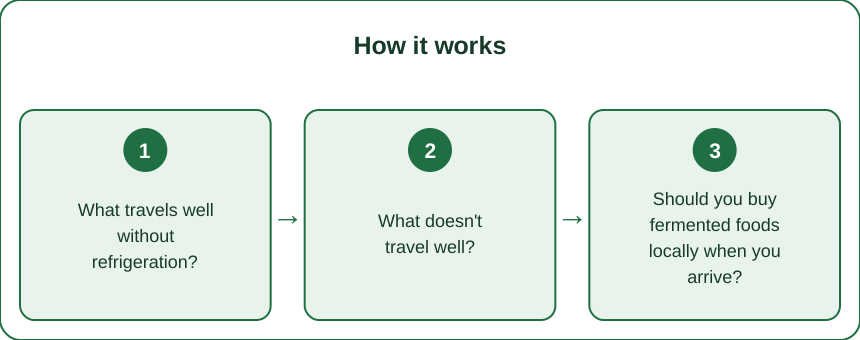
What travels well without refrigeration?
Miso paste, tempeh crackers, fermented hot sauces, and dried or freeze-dried kimchi hold up fine in a bag for several days without cold storage, since fermentation itself is a preservation method. A small squeeze tube of miso is an easy way to add a fermented boost to hotel-room meals.
What doesn’t travel well?
Fresh sauerkraut, kimchi, kombucha, and yogurt are live-culture products that need refrigeration and can leak or spoil in transit. Trying to pack these for anything longer than a short car ride usually ends in a mess, not a benefit.
Should you buy fermented foods locally when you arrive?
Often, yes — most cities and even small towns have at least one grocery store carrying local kimchi, sauerkraut, or yogurt, and trying the regional fermented foods of wherever you’re visiting is part of the fun. A quick search for the destination plus ‘fermented foods’ or ‘health food store’ usually turns up options.

How do you handle flights specifically?
TSA rules mean liquids like kombucha or brine-heavy ferments are restricted in carry-ons. Pack dry or paste-based options in your carry-on, and if you’re checking a bag, jarred ferments can go there — just wrap them well, since they can leak under pressure changes.
What Nobody Tells You About Fermented Foods on Vacation
Most advice about traveling with fermented foods focuses on packing logistics, but the bigger issue is usually mindset, not mechanics. A week without your usual sauerkraut isn’t going to undo months of gut health progress — the gut microbiome doesn’t reset that fast.
The habit that actually matters long-term isn’t never missing a day, it’s not treating one missed week as a reason to quit the habit entirely once you’re home. People who fall off fermented foods for good usually do it after a trip, not because of one — the trip just breaks the routine, and nobody rebuilds it.
A simple fix: put a jar of your usual ferment on the counter, visible, the morning you get back. The visual reminder does more than any packing strategy for actually restarting.
FAQ: Fermented Foods and Travel, Answered
Can you make sauerkraut in a hotel room?
Not practically — fermentation needs consistent temperature and days of undisturbed time, which a hotel room rarely offers. It’s not worth attempting for a short trip.
Is it safe to eat kimchi that’s been in a warm car for hours?
It’s already fermented and somewhat self-preserving, but heat speeds up further fermentation and can make it much sourer or mushier than intended. It’s still generally safe, just possibly unpleasant — refrigerate as soon as you can.
Do fermented food supplements work as a travel substitute?
Probiotic capsules aren’t a true substitute for whole fermented foods, which offer fiber and compounds beyond just live cultures, but they’re a reasonable stopgap for a trip where fresh options are hard to find.
TL;DR:
- Shelf-stable options (miso, dried kimchi, fermented hot sauce) travel well; fresh ferments don’t
- Buying local fermented foods at your destination is often easier than packing your own
- Pack dry/paste ferments in carry-ons to avoid liquid restrictions
- A missed week won’t undo your gut health progress — the real risk is not restarting when you’re home
Put a jar of your regular ferment somewhere visible the day you land — that’s the habit that actually protects the routine.
Keep Reading
This article is for general informational purposes only and is not medical advice. Always consult a qualified health professional for guidance specific to you.