How Much Fermented Food Should You Actually Eat Per Day?
Quick Answer: Most general guidance suggests a modest daily serving — roughly 2-4 tablespoons of fermented vegetables, or a small serving (around 1/2 to 1 cup) of yogurt or kefir — is a reasonable, sustainable target, since fermented foods are typically eaten as an accompaniment rather than a primary dish, and very large quantities can cause digestive discomfort, especially when first introducing them.
The advice to ‘eat more fermented food’ rarely comes with a concrete amount, which leaves people either underdoing it or overdoing it in ways that cause discomfort.

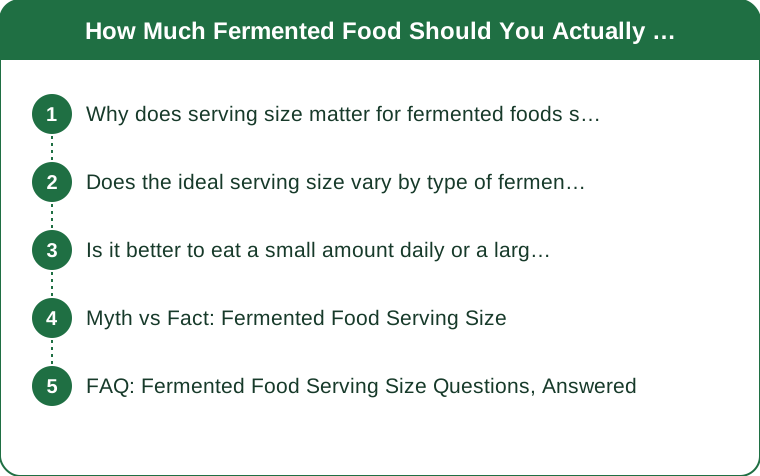
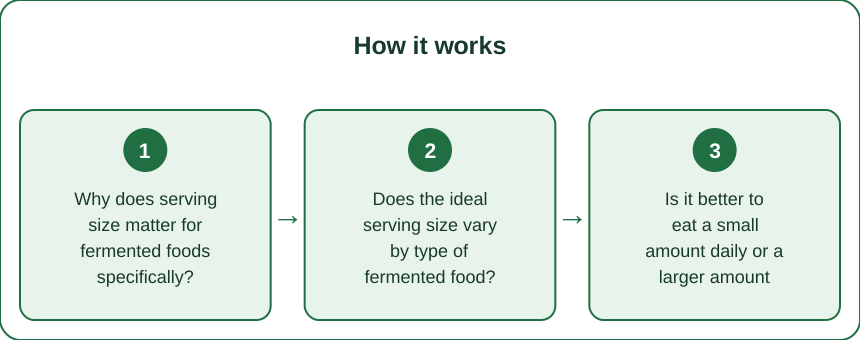
Why does serving size matter for fermented foods specifically?
Fermented foods contain both live cultures and, in some cases, meaningful sodium or acid content, so very large servings can cause bloating, gas, or digestive discomfort, particularly for people just starting to introduce them regularly — a modest, consistent daily serving tends to be better tolerated than an occasional large amount.
Does the ideal serving size vary by type of fermented food?
Yes, meaningfully. Fermented vegetables like sauerkraut or kimchi are typically eaten in smaller quantities (a few tablespoons) due to their concentrated sodium and acid content, while fermented dairy like yogurt or kefir is commonly consumed in larger servings (up to a cup) since it’s often eaten as a standalone food rather than a condiment-style accompaniment.

Is it better to eat a small amount daily or a larger amount less often?
Regular, smaller daily servings are generally considered more beneficial for maintaining gut microbiome diversity than infrequent large servings, since consistency appears to matter more than total quantity for the practical benefits associated with fermented food consumption.
Myth vs Fact: Fermented Food Serving Size
Myth: more fermented food always means more benefit. Fact: benefits appear to plateau at moderate, consistent intake, while very large servings mainly add digestive discomfort risk without proportionally more benefit. Myth: all fermented foods should be dosed the same way. Fact: appropriate serving size varies considerably between concentrated ferments (kimchi, sauerkraut) and larger-format ferments (yogurt, kefir).
FAQ: Fermented Food Serving Size Questions, Answered
Is it safe to eat fermented foods every single day?
For most people, yes, in the modest serving sizes described — this is general information, not medical advice, and anyone with specific digestive conditions or on a sodium-restricted diet should check with a doctor about appropriate fermented food intake.
Should serving size be reduced when first starting to eat fermented foods regularly?
Yes — starting with a smaller serving (a tablespoon or two) and gradually increasing over a couple of weeks helps the gut adjust and reduces the bloating or gas some people experience when introducing fermented foods too quickly.
Does cooking fermented food change how much you should eat?
Cooking typically kills the live active cultures that provide some of fermented food’s specific benefits, so if live cultures are the goal, eating it raw or minimally heated in the recommended serving size is more effective than a larger cooked serving.
TL;DR:
- A modest daily serving (2-4 tablespoons of ferments, up to a cup of yogurt or kefir) is a reasonable target
- Concentrated ferments like kimchi need smaller servings than larger-format ferments like yogurt
- Regular smaller servings appear more beneficial than infrequent large ones
- Start small when first introducing fermented foods to avoid digestive discomfort
This is general information, not medical advice — a consistent, modest daily amount beats an occasional large serving for most people.
Keep Reading
This article is for general informational purposes only and is not medical advice. Always consult a qualified health professional for guidance specific to you.