Why Your Homemade Ferment Tastes Different Every Time — and When That's Fine
Quick Answer: Batch-to-batch variation in home fermentation is normal and usually comes from temperature, produce freshness, and salt measurement differences — not a failed ferment. True spoilage (mold, foul smell, sliminess) is different from normal variation and should be discarded.
You followed the exact same recipe as last month, and this jar tastes sharper, saltier, funkier — same steps, different result. That’s not a mistake on your part. It’s how fermentation actually works.

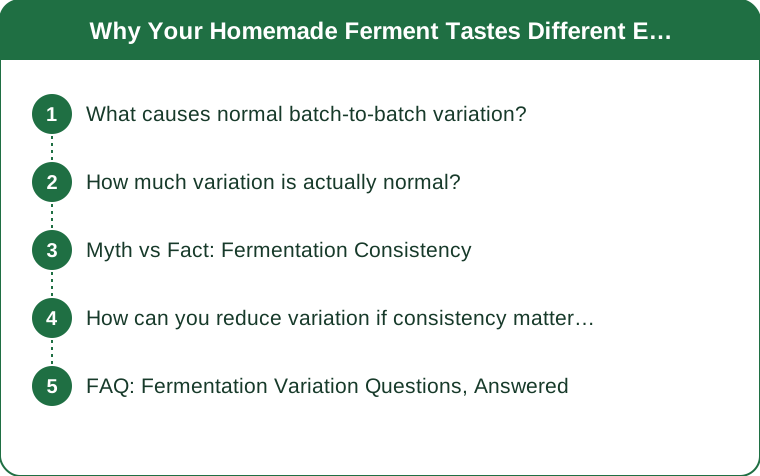
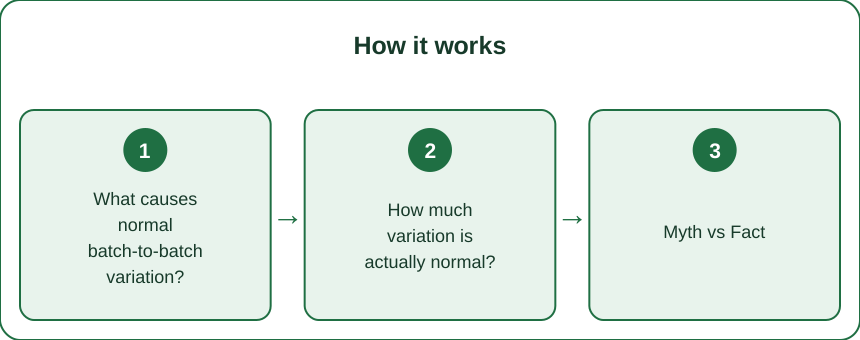
What causes normal batch-to-batch variation?
Room temperature is the biggest factor — a ferment sitting at 75°F develops noticeably faster and tangier than one at 65°F, even with identical timing. A few degrees of seasonal kitchen temperature swing changes the whole result.
Produce freshness and natural sugar content also vary batch to batch (a cabbage picked in peak season ferments differently than one from cold storage), and slight salt measurement differences compound over a multi-day ferment more than you’d expect from a single tablespoon.
How much variation is actually normal?
A wide range: tang level, saltiness, and crunch can shift noticeably between batches while both are completely safe and successful. Think of it more like sourdough starters than a boxed cake mix — living cultures produce a range, not a single fixed output.
What’s not normal variation: pink or fuzzy mold (discard), a smell that’s rotten rather than sour-funky (discard), or sliminess in the liquid (discard). Those are spoilage signals, distinct from flavor variation.

Myth vs Fact: Fermentation Consistency
Myth: A ‘good’ ferment tastes the same every single time. Fact: Commercial products taste identical because they’re standardized industrially. Home ferments from living, variable inputs will always have some range — that’s a feature of real fermentation, not a flaw in your process.
Myth: Faster fermentation means something went wrong. Fact: Faster fermentation usually just means warmer ambient temperature or more active starter culture — check taste and texture, not the clock, to know when it’s done.
Myth: You need a thermometer and scale to succeed. Fact: They reduce variation but generations of home fermenters succeeded with ‘feel’ — a scale just tightens the range, it doesn’t gate success.
How can you reduce variation if consistency matters to you?
Weigh salt as a percentage of vegetable weight (typically 2% by weight) rather than eyeballing tablespoons — this single change removes the biggest controllable variable.
Ferment in the same spot in your kitchen each time, away from heat sources like the stove or a sunny window, and taste-test daily starting on day 3 rather than fermenting on a fixed calendar schedule, since ‘done’ depends on temperature that week.
FAQ: Fermentation Variation Questions, Answered
Is it safe to eat a ferment that tastes stronger than usual?
Yes, if there’s no mold, foul smell, or sliminess — stronger tang from warmer temperatures or longer fermentation is a flavor difference, not a safety issue.
Why did this batch ferment faster than the last one?
Most commonly warmer room temperature or fresher, sugar-richer produce — both accelerate the fermentation timeline without changing safety.
Should you throw out a batch just because it tastes different?
No, taste it first. Different isn’t automatically bad — only mold, off-smell, or slime are genuine discard signals.
TL;DR:
- Temperature swings and produce freshness explain most flavor variation, not user error
- A wide flavor range is normal for living ferments — only mold, foul smell, or slime mean discard
- Weighing salt by percentage (2% of vegetable weight) tightens consistency the most
- Taste-test starting day 3 instead of fermenting on a fixed calendar
Variation is the ferment being alive, not the recipe failing — trust your nose and your taste buds over the clock.
Keep Reading
This article is for general informational purposes only and is not medical advice. Always consult a qualified health professional for guidance specific to you.