Should You Actually Eat More Fermented Foods After Taking Antibiotics?
Quick Answer: Yes, fermented foods can support gut microbiome recovery after antibiotics, but timing matters — taking them at the same time as antibiotics can reduce their effectiveness, so spacing them a few hours apart, and continuing for weeks after finishing the course, tends to work better.
Antibiotics don’t distinguish between harmful bacteria and the beneficial ones fermented foods are trying to support, which is exactly why the timing question matters here more than with most dietary advice.

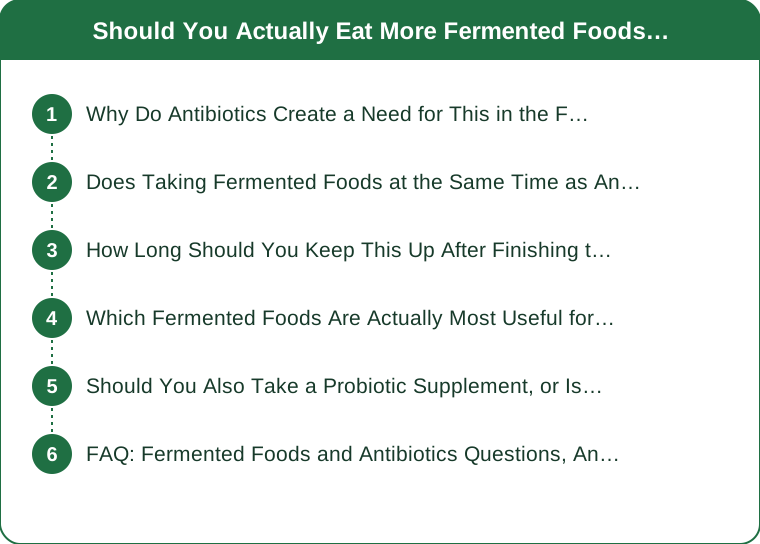
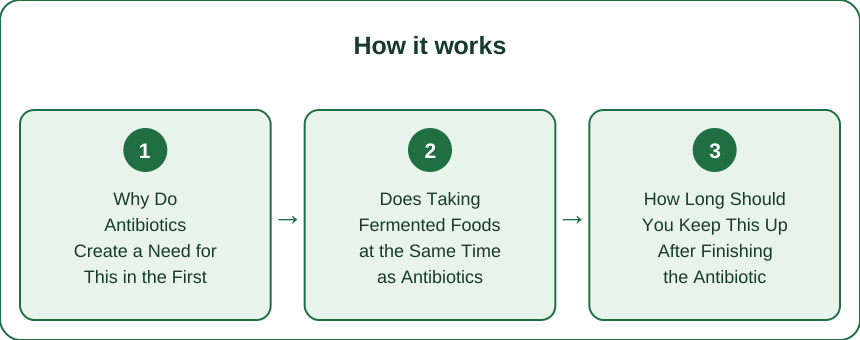
Why Do Antibiotics Create a Need for This in the First Place?
Antibiotics work by killing bacteria broadly, and while they’re targeting the infection you’re treating, they also reduce populations of beneficial gut bacteria along the way. This can lead to temporary digestive symptoms (bloating, irregularity) and a less diverse gut microbiome for weeks to months after a course, which is the gap fermented foods and probiotics are trying to help refill.
Does Taking Fermented Foods at the Same Time as Antibiotics Even Work?
Less well than most people assume. Taking probiotic-rich fermented foods at the exact same time as an antibiotic dose means the antibiotic can kill off a meaningful portion of the beneficial bacteria you just consumed, similar to how it affects your existing gut bacteria. Spacing consumption at least 2-3 hours away from antibiotic doses gives the beneficial bacteria a better chance to actually colonize before the next dose.
How Long Should You Keep This Up After Finishing the Antibiotic Course?
Gut microbiome recovery isn’t immediate once you stop antibiotics — some research suggests certain bacterial populations can take weeks to months to fully rebound. Continuing fermented food intake for at least 2-4 weeks after finishing a course, not just stopping the day the prescription ends, tends to better support that longer recovery window.

Which Fermented Foods Are Actually Most Useful for This Specifically?
Live-culture yogurt, kefir, and unpasteurized sauerkraut or kimchi (check labels — some store-bought versions are pasteurized, which kills the live cultures) contain active bacterial strains that can help. Fermented foods without live cultures, or that have been cooked after fermentation, don’t offer the same probiotic benefit even if they still have the fermented flavor profile.
Should You Also Take a Probiotic Supplement, or Is Food Enough?
This depends on the severity of digestive symptoms and personal preference — some research supports specific probiotic strains (like certain Lactobacillus and Saccharomyces boulardii strains) for reducing antibiotic-associated digestive symptoms specifically, potentially more reliably than food sources alone since supplement dosing is standardized. Food sources are a reasonable, lower-cost starting point, with supplements as an added option if symptoms are significant.
FAQ: Fermented Foods and Antibiotics Questions, Answered
Does this apply to all types of antibiotics equally?
Broad-spectrum antibiotics tend to have a bigger impact on gut bacteria diversity than narrow-spectrum ones targeted at a specific bacteria type, though both can benefit from this approach to some degree.
Can eating fermented foods reduce how well the antibiotic treats my infection?
No — properly spaced fermented food intake shouldn’t interfere with the antibiotic’s job of treating your infection; the spacing concern is about protecting the beneficial bacteria, not about weakening the medication’s effect.
Should I ask my doctor before combining these?
Yes, especially if you’re on other medications or have a complex health situation — this is general information, not medical advice, and your specific antibiotic and health context matter.
TL;DR:
- Antibiotics reduce beneficial gut bacteria alongside the infection they’re treating
- Space fermented food intake at least 2-3 hours from antibiotic doses for better effectiveness
- Continue for 2-4 weeks after finishing the course, not just during it
- Live-culture, unpasteurized fermented foods are the ones that actually deliver the benefit
A little timing awareness makes fermented foods meaningfully more useful during antibiotic recovery than eating them at random.
Keep Reading
This article is for general informational purposes only and is not medical advice. Always consult a qualified health professional for guidance specific to you.