The Fermented Foods and Medication Interaction Almost Nobody Warns You About
Quick Answer: Fermented foods high in tyramine (aged kimchi, some kombucha, miso) can interact with MAOI antidepressants, and the vitamin K content in some fermented vegetables can affect blood thinners like warfarin. Neither interaction means avoiding fermented foods entirely — it means checking with a doctor or pharmacist about consistent portions if you’re on either medication type.
Most fermented food guides focus entirely on gut health benefits, which are real, but almost none mention that a handful of common prescriptions have documented interactions with these same foods.

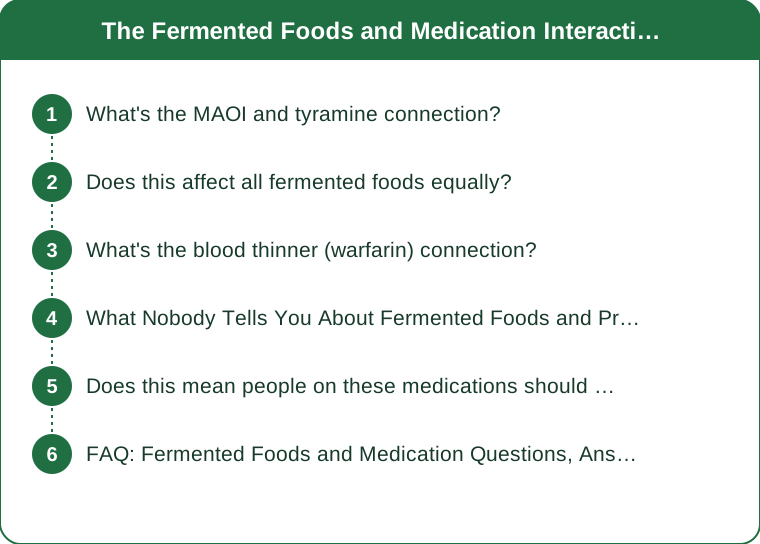
What’s the MAOI and tyramine connection?
Fermented and aged foods accumulate tyramine as part of the fermentation process, and MAOI antidepressants block the enzyme that normally breaks tyramine down in the body — combined, this can cause a dangerous blood pressure spike, which is why MAOI prescribing information specifically lists aged and fermented foods as a caution category.
Does this affect all fermented foods equally?
No — tyramine levels vary significantly by fermentation length and type. Longer-aged items (aged kimchi, miso, some hard cheeses which are fermented too) tend to have higher tyramine than fresher, quick-fermented items like a young sauerkraut, though exact levels aren’t standardized or labeled.
What’s the blood thinner (warfarin) connection?
Warfarin’s effectiveness depends on a stable, consistent vitamin K intake, and fermented vegetables (especially sauerkraut and kimchi, which are cabbage-based) can be notably high in vitamin K — the issue isn’t eating them, it’s eating wildly inconsistent amounts week to week, which throws off the warfarin dosing your doctor calibrated.

What Nobody Tells You About Fermented Foods and Prescriptions
Kombucha’s alcohol content is often overlooked — commercial and homemade kombucha typically contain trace to low alcohol from the fermentation process, which matters for anyone on medications with alcohol interaction warnings, even though it’s rarely flagged the way a beer would be.
Probiotic supplements and fermented foods aren’t automatically interchangeable from a medication standpoint — a probiotic capsule generally lacks the tyramine and vitamin K levels of the whole fermented food, so switching between them isn’t a like-for-like substitution if you’re managing either interaction.
Pharmacists are an underused resource here — most people ask their doctor about food-drug interactions only during a diagnosis conversation, but a quick pharmacist consult when starting a new medication is often the faster, more direct way to get a real answer.
Does this mean people on these medications should avoid fermented foods entirely?
Not necessarily — many people on warfarin manage this by keeping their vitamin K intake (including from fermented vegetables) consistent week to week rather than eliminating it, since consistency is what the dosing calibration actually depends on. MAOI users typically do need stricter limits given the more acute risk.
This is general information, not medical advice — anyone on either medication type should confirm specifics with their prescribing doctor or pharmacist before making fermented foods a regular habit.
FAQ: Fermented Foods and Medication Questions, Answered
Is this interaction common knowledge among doctors?
MAOI prescribers are generally well aware of the tyramine interaction since it’s a standard part of MAOI counseling; the vitamin K and warfarin connection is also standard but sometimes undercommunicated for fermented vegetables specifically, versus the more commonly flagged leafy greens.
Are there fermented foods with lower risk for either interaction?
Fresh, short-fermentation items (young sauerkraut, fresh yogurt) tend to be lower in tyramine than long-aged ones, though vitamin K content still depends mainly on the vegetable itself.
Should I stop fermenting at home if I’m on one of these medications?
Not necessarily — it means talking to your doctor about safe, consistent portions rather than assuming any homemade ferment is automatically fine or automatically dangerous.
TL;DR:
- MAOI antidepressants interact with tyramine, which builds up during fermentation, especially in longer-aged items
- Warfarin depends on consistent vitamin K intake, and fermented vegetables can be a significant source
- Kombucha’s trace alcohol content is worth knowing about for anyone with alcohol-interaction warnings
- Neither interaction means avoiding fermented foods — it means asking a doctor or pharmacist about consistent portions
The gut-health upside of fermented foods is real, but it’s worth a five-minute conversation with a pharmacist if you’re on either medication type. This is general information, not medical advice.
Keep Reading
This article is for general informational purposes only and is not medical advice. Always consult a qualified health professional for guidance specific to you.